Questions to ask grandparents about WW2, who were children at the time.
Most people who still remember the Second World War were children then. Questions about evacuation, rationing, migration and the home front, and why it matters.
About sixteen million Americans served in the Second World War. By 2024, the US Department of Veterans Affairs estimated that around 66,000 of them were still alive, fewer than half of one per cent. Within a few years there will be no one left who carried a rifle in that war.
There will, for a while longer, be people who remember it. They are not the soldiers. They are the children. A person who was five when the war ended in 1945 was born in 1940, and is in their mid-eighties now. Most of us have no memories from before the age of three or four, for reasons explained in the post on childhood amnesia, so almost everyone alive today with a real memory of the war remembers it as a child: the evacuation train, the ration book, the blackout, the father who came home a stranger, the ship to a new country afterwards.
That changes what you should ask. Most lists of questions to ask grandparents about WW2 are written for veterans: where did you serve, what did you see, were you scared. If your grandparent was born in the late 1930s, those questions will produce polite blankness. The right questions are about a wartime childhood, and that turns out to be a part of the war that history has recorded far less thoroughly than the fighting.
Whose war has already been recorded?
The soldiers’ war is one of the best-documented events in human history. Every army kept unit diaries, casualty lists and service records. Generals wrote memoirs. Historians have spent eighty years on campaigns and battles. Even the personal side has been collected on a large scale: in 2003 and 2004 the Australians at War Film Archive filmed around 2,000 Australian veterans and their families, many interviewed for five hours or more in their own homes. The Imperial War Museum in London and the Library of Congress in Washington hold tens of thousands of recorded interviews.
The child’s war left far fewer traces. Children do not keep unit diaries. The evacuation of British cities, Operation Pied Piper, began on 1 September 1939 and moved about 1.5 million people, around 800,000 of them schoolchildren, in its first few days. It is recorded in government files as logistics: trains, billets, numbers. What it felt like to be seven years old, with a label tied to your coat, standing in a village hall while strangers chose which children to take home, survives mainly in the memories of the people it happened to. The Kindertransport carried about 10,000 mostly Jewish children from Nazi Germany and the territories it controlled to Britain in 1938 and 1939; many never saw their parents again. The youngest of those children are now in their late eighties.
There were exceptions. Mass Observation, a British social research project founded in 1937, asked ordinary people to keep diaries, and a housewife in Barrow-in-Furness named Nella Last kept one from 1939 until 1966. Her wartime entries were later published and turned into the television film Housewife, 49 (2006). Diaries like hers are prized by historians precisely because they are rare. For most families, the home front exists only in the heads of the oldest living relatives. Even a family famous enough to earn a statue can lose the voice at its centre: see the story of the Lysenko brothers, ten Ukrainian sons who all came home from the war.
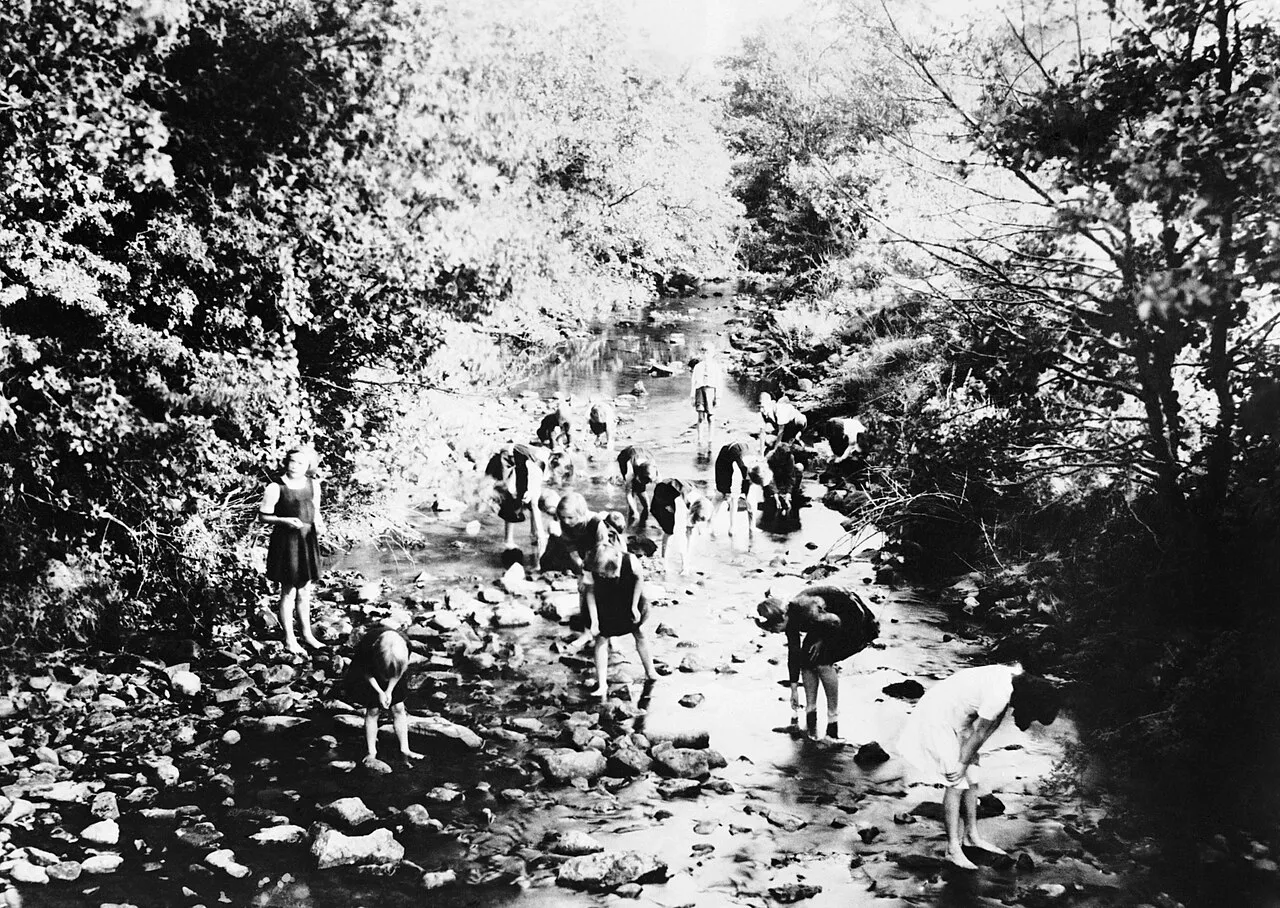 Children from Woodmansterne Road School in Streatham, evacuated to Farmers, Carmarthenshire, search a stream for young trout, 1940. Ministry of Information photographer. Public domain.
Why are children’s memories of war worth recording?
A reasonable objection is that a child’s memory is a poor historical source. A seven-year-old does not understand the politics of a war, rarely knows dates and may have absorbed family stories so thoroughly that they feel like memories. All of this is true, and it is discussed in more detail in is oral history reliable?.
But a child’s memory is extremely good at exactly what official records leave out. Children notice food, smells, sounds, the moods of adults and the rules that suddenly change. They remember the taste of powdered egg and the first banana after the war, which adults treated as unremarkable. They remember what their mother said when the telegram came, not the date on the telegram. And because the war fell during the years of life that we remember most vividly afterwards, as the post on the reminiscence bump explains, those memories are often unusually sharp. When I have filmed Holocaust survivors who were children during the war, the details that stayed with them were almost never the ones a historian would have asked about first.
There is a second reason. For many families the most important part of “the war” happened after it ended. British rationing began on 8 January 1940 and did not fully end until meat came off the ration on 4 July 1954. In Australia, rationing of clothing, tea, sugar, butter and meat began in 1942, and tea, the last item, was not freed until July 1950. Between 1947 and the early 1950s, Australia took in about 170,000 displaced persons from the camps of Europe, the first of them Baltic refugees who landed at Fremantle in November 1947. Hundreds of thousands more migrants followed through reception centres such as Bonegilla, near Wodonga. If your grandparent was born in Europe in the late 1930s, their war story is very likely also a migration story, and the questions should follow it across the ocean.
Questions to ask grandparents about WW2
These are grouped by theme. You do not need to ask them all, or in order. One good answer that turns into a story is worth more than twenty short ones.
Before the war
- Where were you living when the war started? Tell me about the house and who lived in it.
- Do you remember being told the war had begun? Who told you, and how did the adults react?
- What did your parents do for work at the time?
Daily life on the home front
- What did you eat during the war? What did you miss most?
- Tell me about the ration book. Who did the shopping, and how did they make it stretch?
- Do you remember the blackout, air-raid shelters or sirens? What did they sound like?
- What games did you play? Did the war get into your games?
- What was school like? Did teachers or classmates disappear?
- Were there soldiers, prisoners of war or refugees in your town? What did people say about them?
Evacuation and separation
- Were you ever sent away from home? Tell me about the day you left.
- Who looked after you, and what were they like?
- Did anyone in your family go away to fight or to work? How did you hear from them?
- Do you remember anyone coming home? Were they different?
Fear, loss and the end of the war
- Was there a moment when you were frightened? Tell me about it.
- Did the family lose anyone? How was it talked about, or not talked about?
- Where were you when the war ended? How did people celebrate?
Afterwards
- What changed in your family after the war?
- How long did shortages go on? When did life start to feel normal?
- If you moved to a new country, tell me about the journey and the first place you lived when you arrived.
- What did you never talk about when you were younger, and why?
- What do you think people today misunderstand about that time?
A useful rule from oral history practice: ask for scenes, not summaries. “What was the war like?” invites a generalisation. “Tell me about the day you left” invites a story, and the story will answer questions you did not know to ask. The post on how to interview someone with open-ended questions explains why this works.
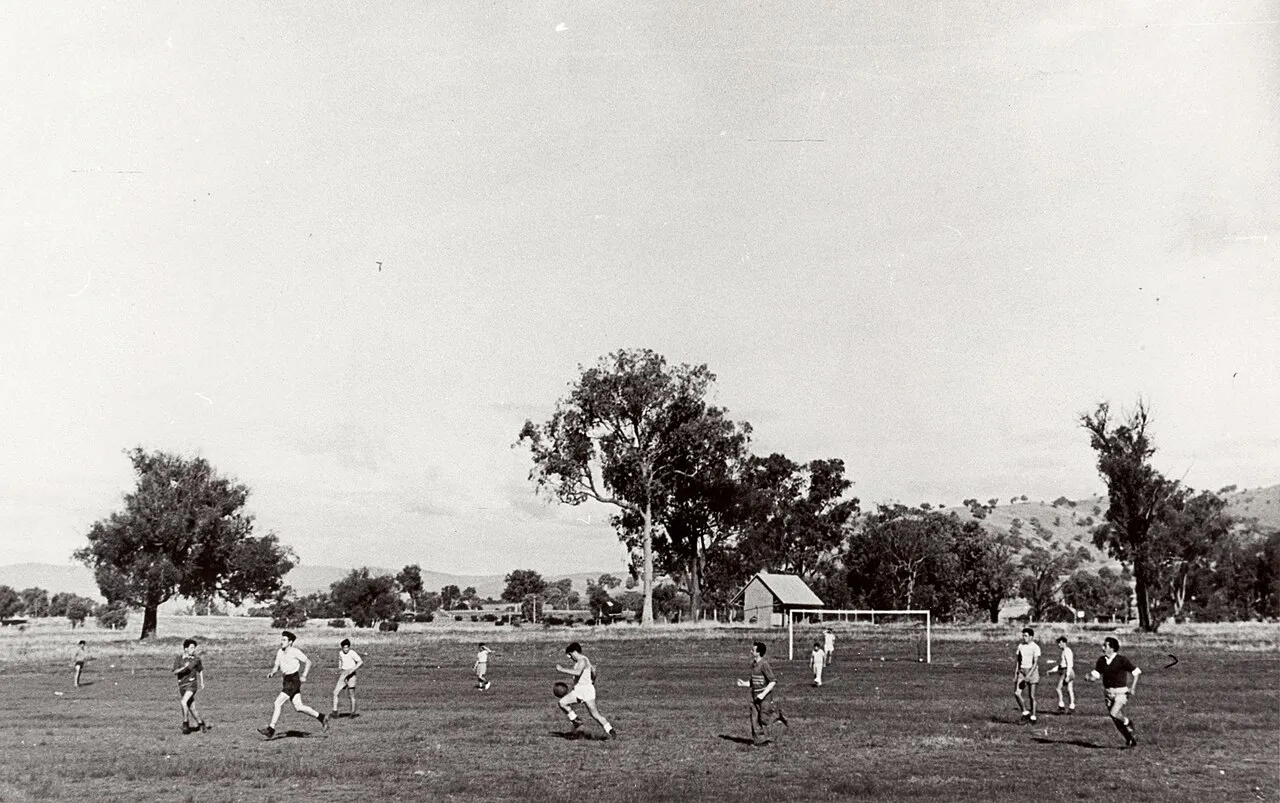 Migrants from the Bonegilla Migrant Reception Centre in Victoria playing soccer, 1952. State Library of Victoria. CC0.
How do you ask about hard memories?
Some grandparents will talk about the war for hours. Others never have. Both reactions are common, and the silence is not always about trauma. Many people of that generation were brought up to believe that their own experience was unimportant compared with what the soldiers went through, or that complaining about a childhood in wartime was self-indulgent when others had lost so much.
A few things help:
- Start with ordinary life. Food, school and games are safe ground, and they often lead naturally to the harder material once trust is established.
- Use objects. A ration book, a medal, a photograph of a parent in uniform or a passenger list from a migrant ship will prompt memories that a direct question will not.
- Give them control. Say plainly that they can skip any question, and mean it. A recording of a wartime kitchen is not a lesser record because the bombing is missing from it.
- Let silence do some work. If a long pause follows a question, wait. People often decide in that pause whether to tell you the next part.
The post on how to get a parent to talk about their past goes into reluctance in more detail.
Why film the answers?
Eighty years after the war, the soldiers’ stories have been gathered into archives, and the children’s stories mostly have not. The difference is not that they matter less. It is that no institution was ever set up to collect them, and the job therefore falls to families.
A written note of what your grandmother remembers is useful. A video of her telling it is something else: her face when she describes the first orange after the war, the accent she brought from the old country, the pause before she mentions her father. Her great-grandchildren will learn the dates of the war at school. They can only learn what it was like to be a child in it from her.
None of this requires a professional crew. A phone on a stack of books, a quiet room and an hour is enough, and the post on how to film an interview at home covers the practical details. An app such as Everyone can help by asking one question at a time, so that a wartime childhood is kept as a set of short videos rather than one long afternoon. For a broader set of questions about the rest of their lives, see questions to ask your grandparents before it’s too late.
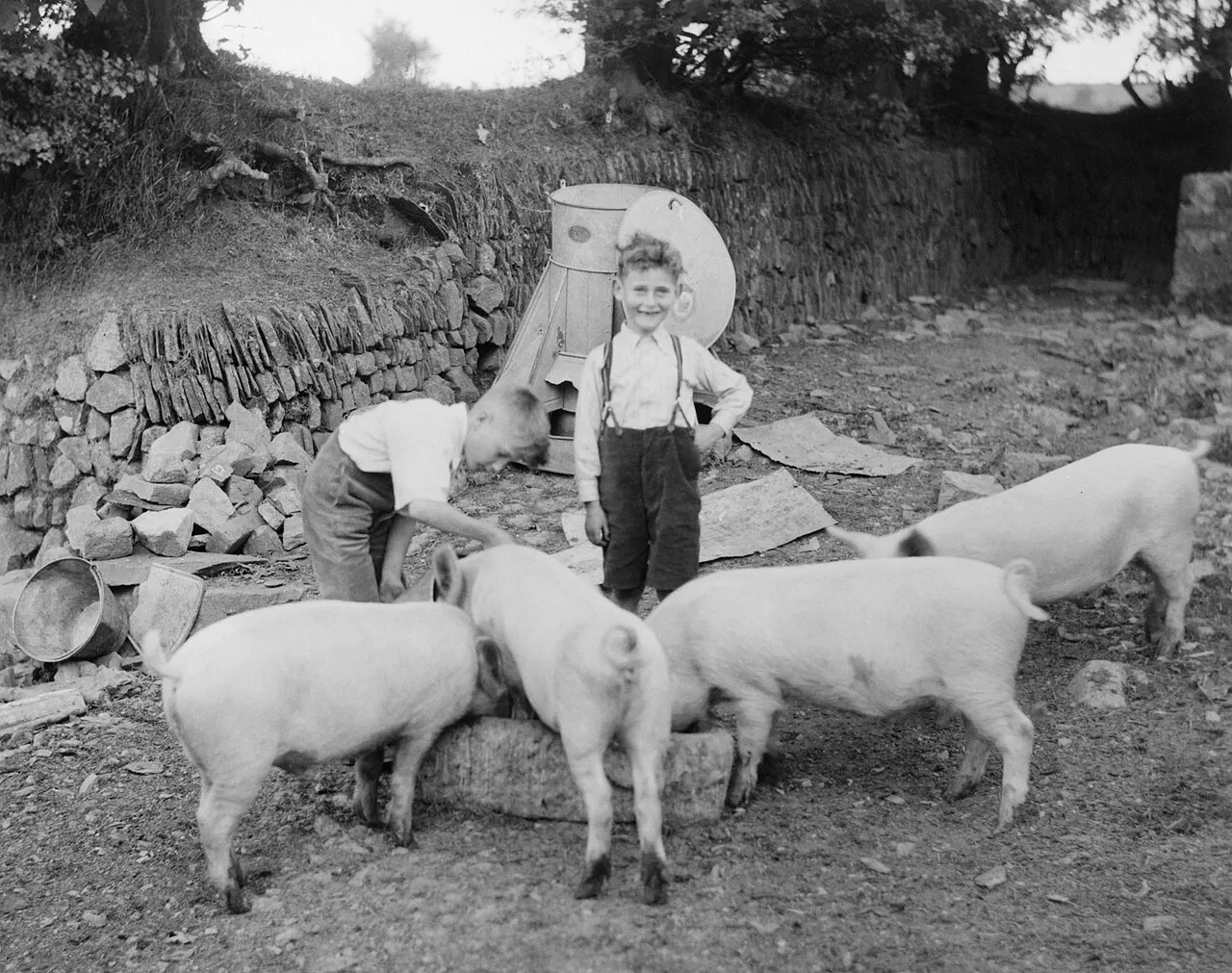
The last people who remember the Second World War are not generals or soldiers now. They are the children who fed the pigs on a Welsh farm, queued with a ration book, or stepped off a ship at Fremantle. They are, in many families, still within reach of a phone call.