Can a video be your will? Rarely. But it can explain one.
Can you make a video will in Australia? Courts have accepted a few, but only after costly hearings. Why a video is a poor will and a very good companion to one.
Shortly before he went to collect a new motorbike, a Queensland man named Jay Schwer recorded a short video on his phone. He had no will. His partner had urged him to make one, and in the video he said that everything he owned should go to her, not to the wife from whom he was estranged, and that he would sort out the proper forms later. He never did. He crashed the motorbike, suffered a serious head injury, and died about fourteen months later.
His wife argued that a phone video could not be a will. In Radford v White [2018] QSC 306, the Supreme Court of Queensland disagreed, and declared that the recording formed his will.
So the short answer to “can I do a video will?” is: in Australia, a court can sometimes accept one. The longer answer, and the more useful one, is that a video makes a poor will and an excellent companion to one. The difference says something about what a will is for, and about what it leaves out.
This is not legal advice. I am not a lawyer, and the rules differ between states and countries. If you want your wishes carried out, make a proper written will with a lawyer or a reputable will service.
What does the law normally require for a will?
The rules in every Australian state descend from the same source: the English Wills Act of 1837, which set out formalities that still look familiar. A will must be in writing, signed by the person making it, and signed in the presence of two witnesses who are present at the same time and who sign it as well. Queensland’s version is in section 10 of the Succession Act 1981.
These rules exist for good reasons. A will speaks only after its author is dead, which means the one person who could clarify it is never available for questions. The formalities are a substitute for that missing person. They make it difficult to forge a will, difficult to pressure someone into one, and easy to tell a considered decision from a passing remark.
For a long time, courts applied them strictly. A will with one witness instead of two could fail entirely, even if everyone agreed it said what the dead person wanted.
When can a court accept a video will?
The change began in South Australia. In 1975 it amended its Wills Act to let the Supreme Court admit a document that had not been properly executed, as long as the court was satisfied the deceased intended it to be their will. Every Australian state and territory now has a version of this “dispensing power”: section 18 of the Succession Act 1981 in Queensland, section 8 of the Succession Act 2006 in New South Wales, and section 9 of the Wills Act 1997 in Victoria, among others.
The power usually turns on three questions. Is there a document? Does it set out the person’s wishes about their property after death? And did they intend that document, by itself, to be their will?
The first question is where video comes in. Legal definitions of “document” are broad, and in Queensland they extend to records from which sounds and images can be reproduced. Once a phone video counts as a document, the argument shifts to the other two questions. In Jay Schwer’s case, the court accepted that he was clearly stating what should happen to his property, and that his plan to do the paperwork later did not mean he intended the video to have no effect in the meantime.
He is not the only one. Queensland courts have admitted a dictated voice memo and voicemail (Re Estate of Carrigan [2018] QSC 206), a video recorded on a phone shortly before death (In the Estate of Quinn [2019] QSC 99) and an unsent text message (Re Nichol [2017] QSC 220). Courts elsewhere in Australia have accepted other unusual formats.
Why is a video a poor substitute for a will?
Because every one of those cases needed a court hearing to decide what a proper will would have settled on day one.
A dispensing power is a rescue mechanism, not an alternative method. The person relying on the video has to apply to the Supreme Court and prove, with evidence, that the deceased meant it as their will. Someone else may oppose them, as Jay Schwer’s wife did. The case takes time, and it costs money: in a follow-up decision in 2020, the court ordered that both sides’ legal costs be paid out of his estate, which is to say out of the very property the video was meant to pass on.
The cases that make the news are the ones that succeeded. A video that is ambiguous, that sounds like musing rather than deciding, or that was recorded when the person’s capacity was in doubt can fail. It can also do something worse than fail. It can start the family argument that a will is supposed to prevent.
So a will in the normal form, written, signed and witnessed, is the only sensible way to say who gets what. If that is the question you came here with, the answer is to make one.
What does a written will leave out?
The reason. A will is designed to state decisions as plainly as possible and to explain nothing.
William Shakespeare’s will, signed in 1616 a few weeks before his death and now kept at The National Archives in Kew, is the most famous example. It runs to three pages of careful legal bequests to his daughters, his sister, friends and fellow actors. His wife, Anne, is mentioned once, in a line squeezed between others on the final page: he leaves her his “second best bed with the furniture”.
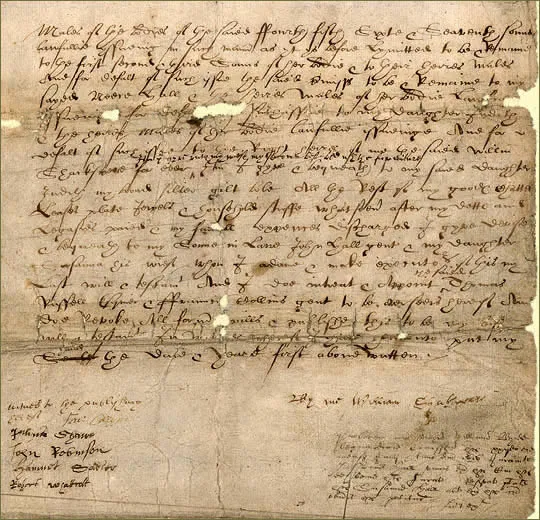 The third page of William Shakespeare’s will, 1616, with his signature, “By me William Shakspeare”, and the witnesses’ names. The National Archives, Kew. Public domain.
Scholars have argued about that line for centuries. Some read it as a snub. Others point out that the best bed was usually kept for guests, that the second-best was likely the marital bed, and that a widow may have been provided for by custom in any case. Nobody knows, because the document was not built to tell us. It records what he decided and nothing of what he meant.
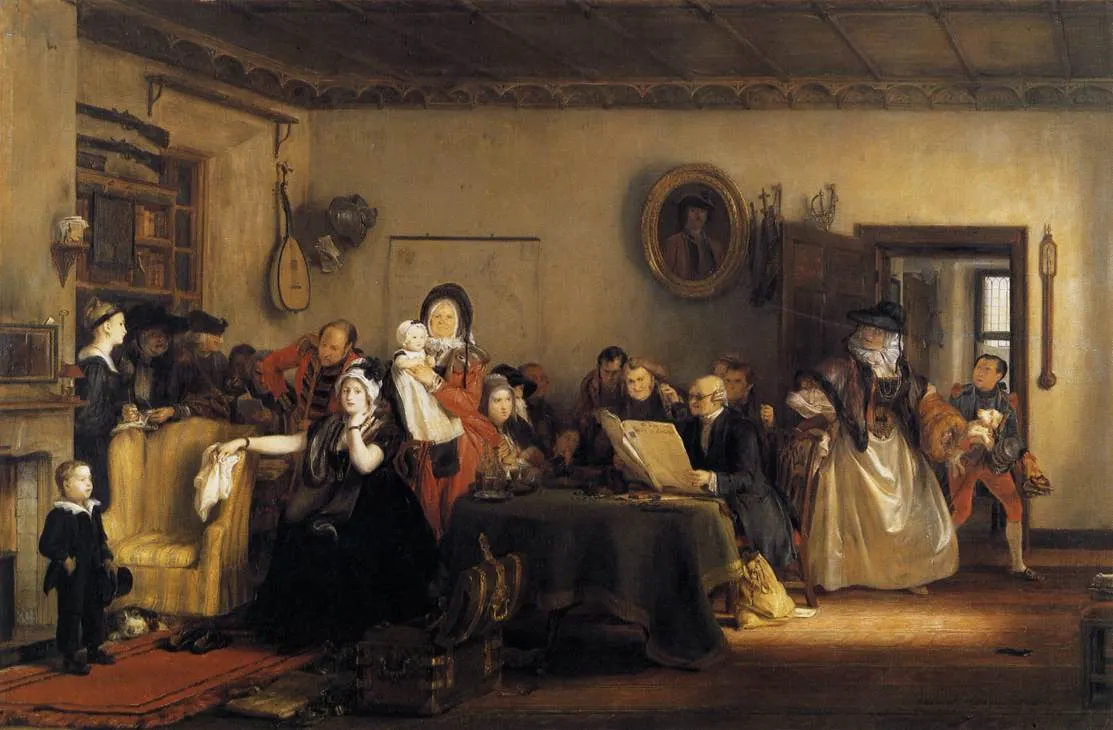
Most wills are like this, and most of the time it hardly matters. But when it does matter, it matters a great deal. An unequal division between children, a gift to someone outside the family, a decision to leave the house to one person and not another: each can be read as a judgement on the people left behind. A paragraph of legal text, read aloud in a lawyer’s office, cannot reassure anyone. The scene David Wilkie painted in 1820, shown at the top of this page, is still recognisable two centuries later: a room full of relatives watching a document, trying to read in it what the dead person thought of them.
Why does a video work so well beside a will?
Because it can do exactly what the will cannot. It can explain, in your own face and voice, why you made the choices you made.
Explanations carry very differently on video. Written down, “I have left the house to your sister because she cared for me in my last years” can read as an accusation. Said aloud, with the tone and expression of the person who loved you both, it is far more likely to be heard as it was meant. Since 2020 I have filmed more than a hundred people telling their life stories, and the thing video preserves best is not information. It is intention: the hesitation before a difficult sentence, the smile that tells you a complaint is affectionate, the warmth that makes a hard decision bearable.
There is a second benefit. A will is about property, but most of what people want to leave is not. When I filmed my grandmother, she talked for four hours, and none of it was about who should have her furniture. It was about where she came from, what she had survived and what she hoped for the people she loved. That material has no place in a legal document, and it is worth more to her family than anything a will could distribute. (If you are not sure where to begin, I have written about legacy video questions: what to say to your children on camera.)
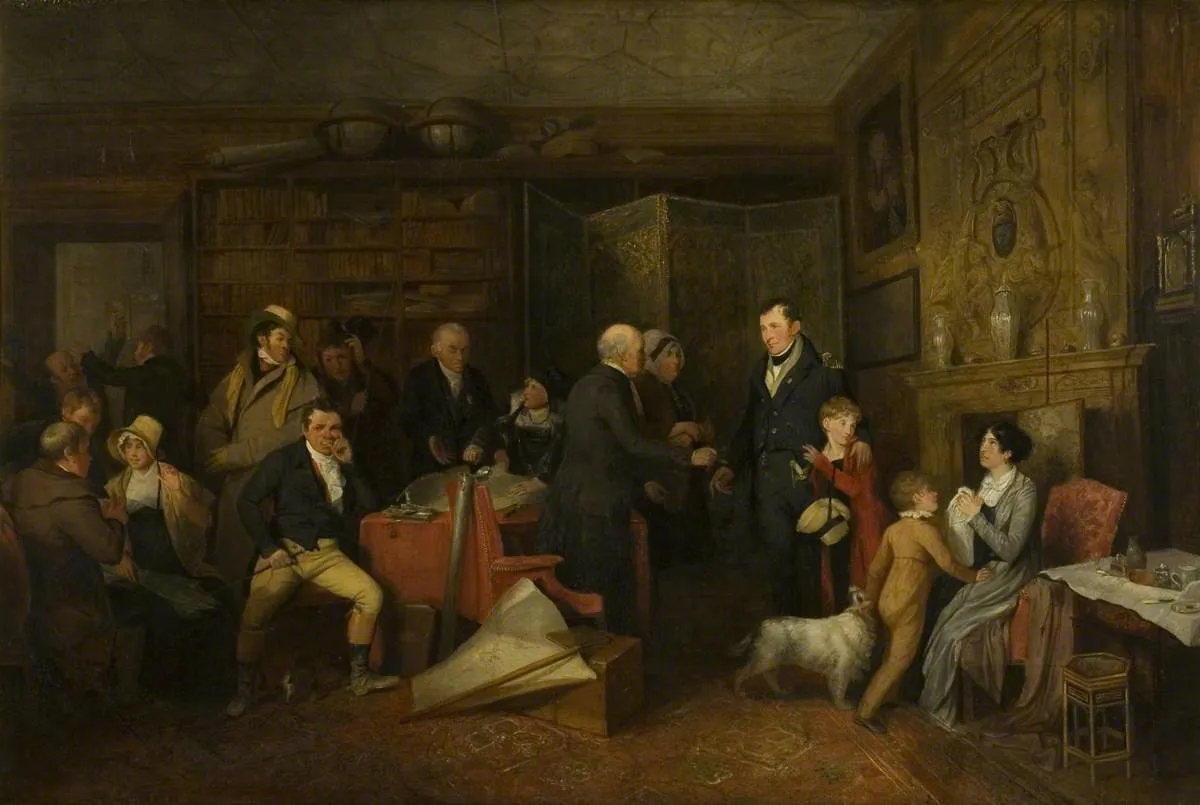 “The Reading of the Will Concluded” by Edward Bird, 1811. Bristol Museum & Art Gallery. Public domain.
How do you make a video to go with your will?
A few principles, none of which replace advice from your own lawyer:
- Make the written will first. The video is a companion, not the main document.
- Say plainly what the video is. It may be wise to state that it is not your will, and that your will is the signed document dated on a particular day, so that nobody tries to treat the recording as a competing set of instructions. Ask your lawyer how best to word this.
- Explain, do not repeat. There is no need to read out the bequests. Spend the time on the reasons, and on the people.
- Talk to people, not about them. Address your children, your partner, your friends by name. A message is more likely to land when it is spoken to someone.
- Go beyond the estate. Say what you would want remembered about your life, and what you hope for theirs.
- Keep it findable, and current. Tell your executor where it is. If you change your will, record again.
The document and the person
The law took nearly a century and a half to accept that a will might come in a form other than ink on paper, and it accepts that form reluctantly, case by case, after the fact. That caution is sensible. A will has to work when its author can no longer be asked anything.
But the same fact, that the author can no longer be asked, is what makes the video so valuable. Long after the estate is divided, the people you leave behind will still want to know what you meant. A will can tell them what you decided. Only you can tell them why, and the simplest way to do that is to sit down in front of a camera while you still can. (Recording the story of your life, not just your wishes, is easier than it sounds; see how to record your life story.)
We built Everyone partly for this kind of recording: one question at a time, filmed on your phone, and kept for the people who will come after. Make the proper will with a lawyer. Then make the video that explains it.