Questions to ask your parents before they die, on one printable page.
A free printable PDF of 35 questions to ask your parents before they die, why a list on paper makes the conversation easier to start, and how to ask them well.
Download the printable PDF: Questions to Ask Your Parents Before They Die (one A4 page, free to print and share). The full list is also below.
In 2015 the writer Tim Urban published an essay called “The Tail End”, built on a piece of uncomfortable arithmetic. He counted how many days a year he now spent with his parents, compared it with how many he had spent with them as a child, and concluded that by the time he finished high school he had already used up roughly 93 per cent of all the in-person time he would ever have with them. The figure was an estimate based on his own family, and yours will differ. The shape of the curve will not. For most people, the years of daily contact with their parents end at around eighteen, and what follows is a long series of visits.
The visits are where the questions get asked, or more often do not. This page offers a set of questions to ask your parents before they die, as a printable PDF and as a list, and makes an argument about why printing them helps. The difficulty most people face is not knowing what to ask. It is finding a way to begin.
Why don’t we ask while we can?
If you search for questions to ask your parents, you will find hundreds. The supply of questions is not the problem. The problem is that asking your mother about her first love, or your father about the worst year of his life, breaks the ordinary rules of family conversation. Families talk about logistics, the news and the grandchildren. A sudden question about the meaning of a life feels like an announcement that someone is going to die.
So we wait for a natural moment, and the natural moment rarely comes. When it does, it tends to come in a hospital, when the person is tired, medicated or no longer able to answer. Having filmed more than a hundred life stories through The Archive since 2020, I have come to think of this as the normal pattern rather than the exception, and I explored the reasons in questions I wish I had asked my parents. The short version is that the cost of asking is felt immediately, as awkwardness, while the cost of not asking arrives years later, as regret. People reliably overweight the first.
Why does a printed list make it easier?
A sheet of paper changes the social meaning of the question. Without it, you are a son or daughter suddenly asking something strange. With it, you are doing a recognisable activity: going through a list. The paper carries some of the awkwardness for you. It also tells your parent what to expect. They can see that the questions are mostly about childhood, love and work, not about illness, and they can see that they are allowed to skip any of them.
There is a precedent for this from medicine. The journalist Ellen Goodman, after her mother’s death, co-founded The Conversation Project with the Institute for Healthcare Improvement to encourage families to talk about end-of-life wishes before a crisis forces the question. Its central tool is not an app or a seminar but a free, downloadable conversation starter guide. The premise is the same: people who mean to have a hard conversation are far more likely to have it if they are holding something that tells them how to start.
The printable list also does something less obvious. It gives your parent the questions in advance. Leave it on the kitchen table a few days before you plan to talk. Most people answer better when they have had time to remember, and a question read on Tuesday will often produce, by Saturday, a story that had not been thought about in forty years.
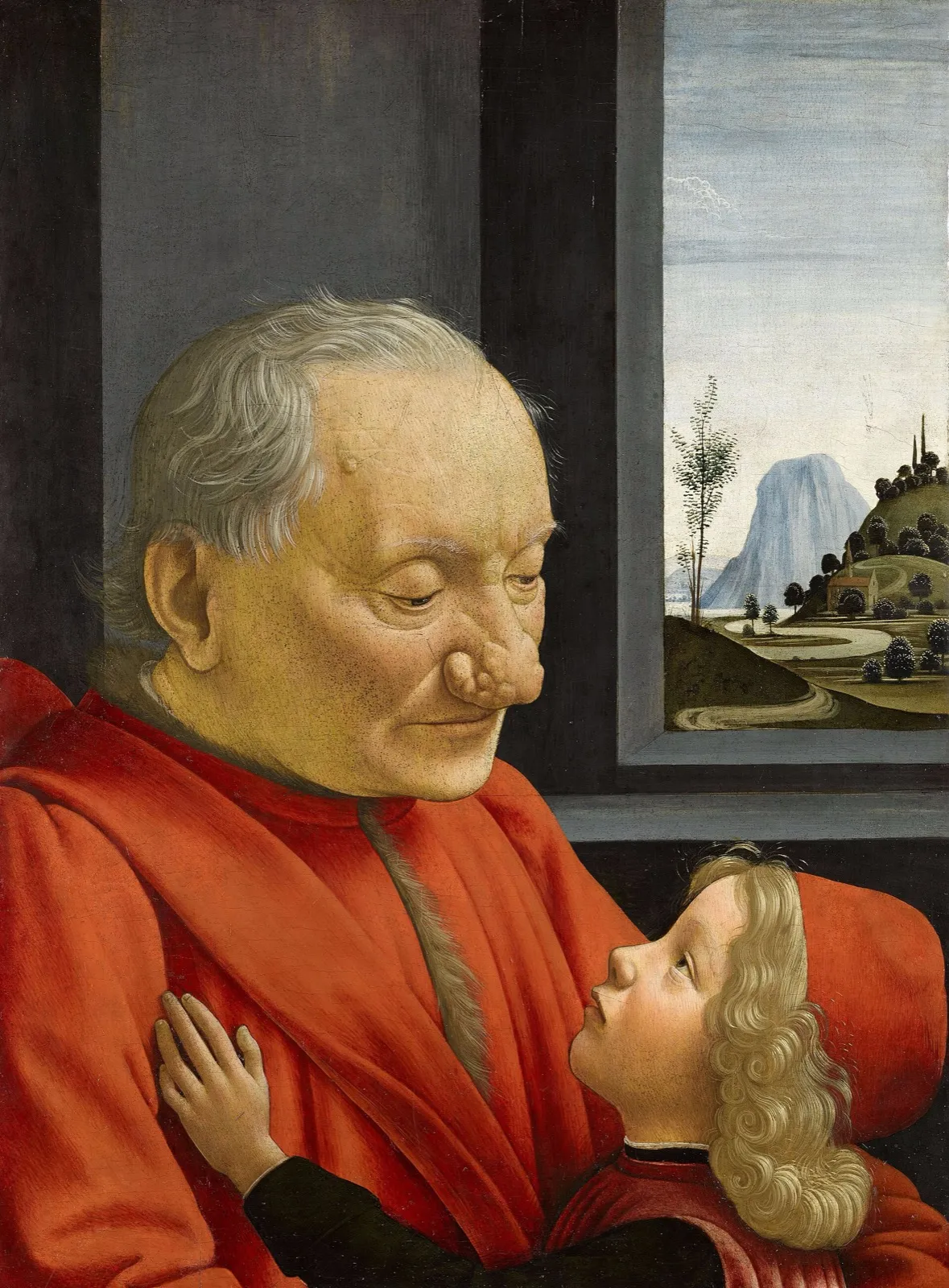
 “Old Woman Reading” by Gerrit Dou, about 1631–32. Rijksmuseum, Amsterdam. CC0.
Questions to ask your parents before they die
These are the 35 questions on the printable sheet, in the order they are best asked: easy and factual first, harder in the middle, reflection at the end. Five good questions, each followed up, will produce more than thirty-five asked in a hurry.
Childhood
- What is your earliest memory?
- Describe the house you grew up in. What did it smell like?
- What did you get in trouble for as a child?
- Who was your closest friend, and what did you do together?
- What did you want to be when you grew up?
Your own parents
- What were your parents like when you were young?
- What did you learn from your mother? From your father?
- What do you know about your grandparents and where they came from?
- What is a family story that should never be lost?
Growing up
- When did you first feel like an adult?
- What was your first job, and what did you spend your first pay on?
- Where did you go and what did you do at nineteen?
- Which decision changed the course of your life?
Love
- Who was your first love, and what happened?
- How did you meet Mum (or Dad)? Describe the day.
- What has love taught you that you did not expect?
Becoming a parent
- What was the day I was born like?
- Why was I given my name?
- What was I like as a small child?
- What surprised you most about being a parent?
- Is there anything you would do differently?
Hard times
- What is the hardest thing you have been through, and what got you through it?
- What was the hardest goodbye of your life?
- Who did you have to forgive, and were you able to?
- What is the kindest thing a stranger has done for you?
Looking back
- What are you most proud of?
- What is the most important thing you have changed your mind about?
- What do you wish you had done more of?
- What would you tell your younger self?
- What do you hope your grandchildren will know about you?
- How do you want to be remembered?
Things we should know
- If you were seriously ill and could not speak for yourself, what would matter most to you?
- Who should make decisions for you if you could not?
- Where are your important papers, and is there a will?
- Is there anything you want done, said or kept after you have gone?
The last question
End every conversation with: “Is there anything I haven’t asked that you would like to talk about?” It breaks every rule above, since it is as broad as a question can be. It works because many people are carrying one story they have been waiting for someone to ask about, and no list can anticipate it.
Why is question 12 so specific?
Several questions on the list are narrower than they need to be, and this is deliberate. “What was your youth like?” asks a person to produce a summary on the spot, and most people answer with a sentence. “Where did you go and what did you do at nineteen?” points to a particular place and time, and memory is retrieved by cues of exactly that kind. The age is chosen for a reason too. Older adults recall a disproportionate share of their most vivid memories from roughly their teens and twenties, a pattern psychologists call the reminiscence bump. That is where the stories are densest.
The same logic explains questions 17 to 19. Children are often surprised to discover that their parents remember the day they were born in great detail, and asking about it turns the conversation from an interview into a shared story with you in it. For more on why some questions open people up while others get a shrug, see the longer guide to questions to ask your parents about their life.
Why are the practical questions at the end?
Questions 32 to 35 are of a different kind. They concern what your parent would want if they became seriously ill, and where things are kept. They are on the list because these are the questions families most often wish they had asked in time, and they are at the end because they are easier after an hour of stories than at the start. The answers to them belong with a doctor, a lawyer and the relevant legal documents, not only in a family conversation. If a parent is already unwell, questions to ask a dying parent covers how to adapt the conversation to someone who is tired or in hospital.
How should you ask them?
- Choose five. Circle them on the sheet. A conversation of forty minutes on five questions is better than a race through thirty-five.
- Follow up. The first answer is the rehearsed one. Ask “What happened next?” or “How did that feel at the time?”
- Allow silence. When someone stops speaking, they are often deciding whether to continue.
- Let them skip. Say so at the start, and mean it.
- Stop while it is going well. It makes the second conversation easier to begin.
Why film the answers?
You could write the answers down, and that is better than nothing. But a transcript loses most of what makes the answers worth keeping. I have four hours of my grandmother telling me her story. She has since passed away, and what I return to is rarely the information. It is her face while she told it, and the way her voice changed when she spoke about her own mother.
Filming no longer requires a crew. A phone propped on a table at eye level, in a quiet room with the television off, is enough. Everyone, the free app we make, presents questions like these one at a time on screen and keeps the videos for your family, but the camera you already own will do.
Urban’s arithmetic is the reason to start now. If most of the time you will spend with your parents is already behind you, the visits that remain are the ones that count. Print the sheet, leave it on the table, and ask the first question on the next one.